
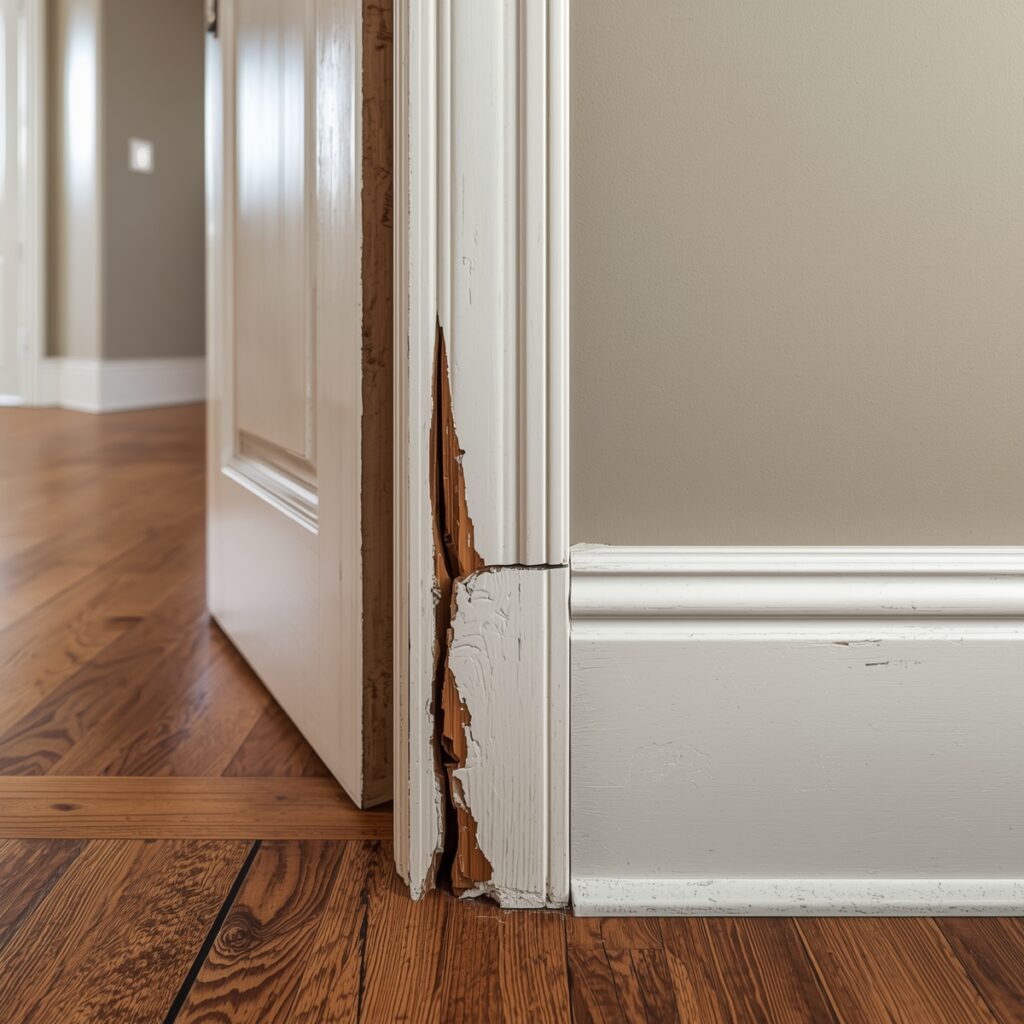
If you live in an older North Kansas City home, trim and molding issues are almost unavoidable. Homes built decades ago were constructed with solid materials, but time, movement, and changing conditions eventually show up in the details. Baseboards pull away, door casings crack, crown molding separates, and once-clean lines start looking uneven.
Trim problems aren’t just cosmetic. In many cases, they signal movement in the home, moisture issues, or aging materials that need attention before the damage spreads. Knowing what’s common in older homes helps you decide when a simple repair is enough and when professional carpentry makes more sense.
Below are 8 of the most common trim and molding problems found in older North Kansas City homes, along with what causes them and when repairs are needed.
1. Baseboards Pulling Away From the Wall
One of the most common issues in older homes is baseboards separating from the wall. You’ll notice gaps along the top edge or sections that feel loose when pressed.
This usually happens because the house has settled over time. Older framing shifts slowly, especially through decades of seasonal temperature swings. As walls move slightly, rigid trim pieces stay put, creating visible gaps.
Humidity also plays a role. Wood expands and contracts as moisture levels change. In homes without consistent climate control, this movement adds stress to nails and adhesive, eventually causing separation.
If ignored, gaps behind baseboards can collect dust, allow drafts, or expose uneven drywall edges. In most cases, baseboards can be re-secured and sealed properly, but repeated separation often means the underlying wall movement needs to be addressed during repair.
2. Cracked or Split Trim Around Doors and Windows
Cracks in door and window trim are especially common in older North Kansas City homes. These areas experience the most movement because doors and windows open, close, and respond directly to exterior temperature changes.
Over time, wood trim dries out and becomes brittle. Nails lose their grip, joints open up, and stress points form near corners and mitered edges. Small cracks may start as hairline splits but tend to grow if left untreated.
In many older homes, trim was installed before modern expansion gaps were standard. Without room for movement, wood splits instead. Depending on the severity, cracks may be filled and reinforced or require partial trim replacement to restore strength and appearance.
3. Crown Molding Separating at the Ceiling or Corners
Crown molding problems are very noticeable because they sit at eye level and draw attention when lines aren’t clean. In older homes, it’s common to see crown molding pulling away from the ceiling, opening gaps at corners, or sagging slightly in long runs.
This often happens because ceilings and walls aren’t perfectly straight in older construction. Over time, minor shifts exaggerate those irregularities. Gravity also plays a role, especially if crown molding was installed with minimal fastening decades ago.
Temperature changes cause ceilings to expand and contract at a different rate than the molding itself. When the bond weakens, separation begins. Proper repair usually involves re-securing the molding, adjusting joints, and sealing gaps so movement doesn’t immediately reopen them.
4. Mitered Corners That No Longer Line Up
Corners are one of the first places trim issues show up. Mitered joints on baseboards, window trim, and crown molding often separate or shift in older homes.
This happens because older framing rarely stays perfectly square forever. As the house settles, angles change slightly, and once-tight joints open up. Even a small shift can make corners look misaligned.
Attempting to simply caulk these gaps usually leads to recurring problems. A proper fix often involves resetting the joint, reinforcing the connection, or reshaping the trim so it aligns with the home’s current structure rather than how it looked decades ago.
5. Nail Pops and Visible Fasteners
In many older North Kansas City homes, trim was installed using nails that were common at the time but aren’t ideal by today’s standards. As wood dries and contracts over the years, those fasteners lose their grip and slowly work their way back to the surface.
You might notice small bumps along trim pieces, tiny cracks forming around nail heads, or fasteners that have pushed out completely. While this can look like a minor cosmetic issue at first, loose trim allows more movement, which often leads to wider gaps, splitting wood, or separation at joints.
Proper repair usually involves resetting or replacing the fasteners and securing the trim in a way that accounts for natural wood movement. When done correctly, this helps stabilize the trim and prevents the same problem from resurfacing a few months later.
6. Water Damage and Wood Rot Near Floors and Windows
Water-related trim damage is more common in older homes than many homeowners realize. Minor leaks, past moisture intrusion, or condensation can slowly damage wood trim without obvious signs at first.
Baseboards near bathrooms, kitchens, and exterior walls are especially vulnerable. Over time, wood becomes soft, discolored, or crumbly. Window trim may show swelling or peeling paint, even if the leak happened years ago.
Once wood rot sets in, repair options become limited. In many cases, affected sections must be replaced to restore both appearance and structural integrity. Addressing the moisture source is critical before any trim repair is completed.
7. Uneven Trim Due to Settling Floors
In older North Kansas City homes, floors are rarely perfectly level anymore. As floors slope or settle, trim installed decades ago may no longer follow a straight line.
This creates uneven gaps, angled baseboards, or trim that appears to rise and fall along a wall. While it’s tempting to ignore this as an aesthetic issue, it often affects how trim connects at corners and doorways, making joints look misaligned or poorly finished.
Over time, uneven trim can also place added stress on fasteners, causing nails to loosen and gaps to widen. Simple patching rarely holds because the underlying floor movement hasn’t been accounted for.
Professional carpentry repairs take these changes into account by adjusting trim placement and joint alignment so it looks straight to the eye, even if the floor underneath isn’t. This approach helps the repair last and prevents the same issues from reappearing.
8. Mismatched or Repaired Trim From Past Renovations
Many older North Kansas City homes have gone through multiple renovations over the years, often completed decades apart. As materials and styles changed, trim was frequently repaired or replaced with whatever was available at the time rather than matched to the original design.
This can result in mismatched baseboards, uneven door casings, or trim profiles that change from room to room. Partial repairs often leave visible seams, inconsistent heights, or joints that don’t line up cleanly. DIY fixes using filler or modern materials can also shrink or crack over time, making the repair more noticeable.
While mismatched trim isn’t always a structural issue, it does impact the overall appearance of the home. Professional carpentry repairs can blend or replace trim sections so they match existing profiles more closely and restore a consistent, finished look.
Similar issues often appear in exterior woodwork as well, where past repairs don’t always match original materials or construction methods. These same challenges are commonly seen with outdoor structures, including decks, as outlined in this overview of common deck repair issues homeowners encounter over time.
When Repair Is Enough and When Replacement Makes Sense
Not every trim or molding issue requires full replacement. Loose sections, minor cracks, small gaps, and separated joints can often be repaired effectively with proper fastening, reshaping, and sealing. When the wood itself is still solid, repairs can restore both appearance and function without disturbing surrounding materials.
Similar repair-versus-replacement decisions also come up with built-in wood features, such as cabinets. Understanding the costs involved can help homeowners make informed choices, especially when deciding between minor fixes and full replacements, as explained in this guide on cabinet repair costs in North Kansas City.
Replacement becomes the better option when the trim has deteriorated beyond a surface-level fix, such as when:
- Wood rot is present or spreading
- Trim has split extensively or continues to crack after repair
- Pieces have warped or twisted beyond proper alignment
- Previous repairs have failed multiple times and no longer hold
A skilled carpenter looks beyond visible damage and evaluates why the problem developed in the first place. Factors like moisture exposure, structural movement, or improper past repairs are addressed as part of the solution. Taking this approach helps prevent repeat issues while preserving the character and craftsmanship of older North Kansas City homes.
Why Older Homes Benefit From Professional Carpentry Repairs
Older North Kansas City homes have a lot of character, but they also come with challenges that modern houses simply don’t have. Walls aren’t always straight, floors may have settled over time, and wood behaves differently after decades of seasonal expansion and contraction.
Professional carpentry services take these factors into account rather than forcing modern, one-size-fits-all fixes onto older construction. Repairs are planned with an understanding of how the home moves, how trim was originally installed, and how it needs to be secured to hold up over time, not just look good right after the work is done.
When trim repairs are done correctly, they restore clean lines, reduce gaps that allow drafts, and help protect nearby drywall, flooring, and framing from further wear. This approach preserves both the appearance and long-term integrity of older homes while respecting the craftsmanship that made them last in the first place.
Final Thoughts
Trim and molding problems are part of owning an older North Kansas City home, but they don’t have to become ongoing frustrations. Recognizing common issues early makes repairs more manageable and helps preserve both the function and appearance of your home.
Whether it’s baseboards pulling away, cracked door trim, or crown molding gaps, addressing these problems properly keeps small issues from turning into costly repairs later. With the right approach, trim and molding can be restored to match the character and quality older homes are known for.
For reliable carpentry repair in North Kansas City, contact North Kansas City Handyman to schedule a visit. Whether the issue needs repair or replacement, professional carpentry services can help restore clean lines and protect your home from further damage.